
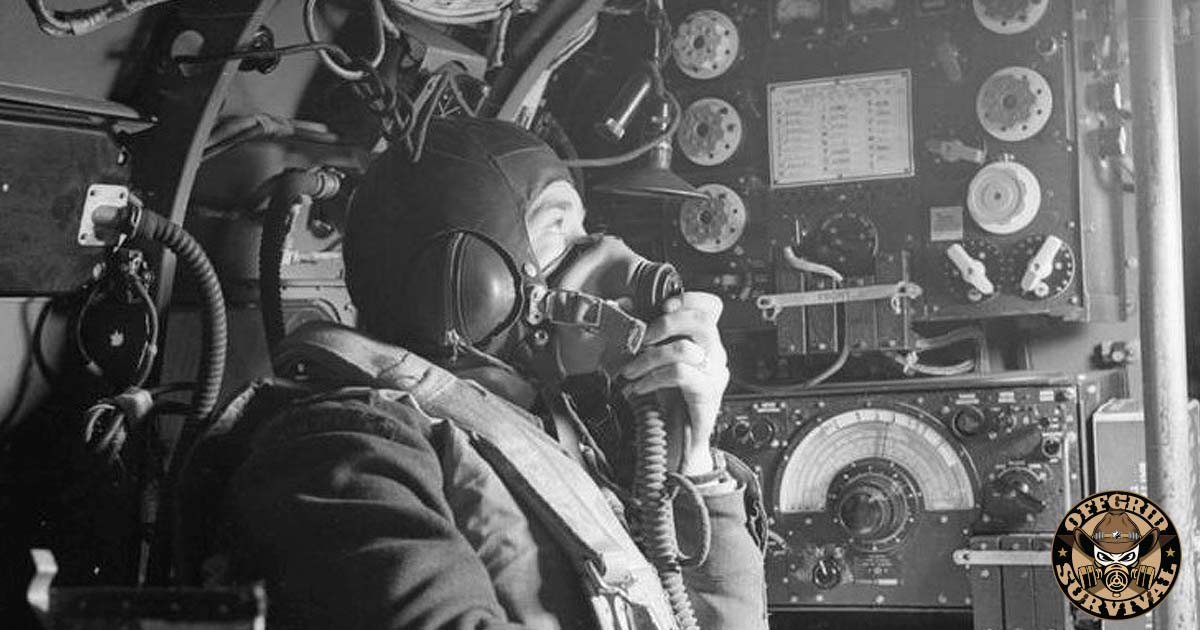
One of the best ways to protect yourself and your family during any crisis or disaster is to stay aware of what’s going on around you. That means knowing where to find real-time, unfiltered information, knowing how to decipher it when you receive it, and then coming up with a plan of action based on the best facts available to you at the time.
Most people never think about this until the moment they desperately need it. By then it’s too late to figure out which app to download or which frequency to dial in. The time to build your intel-gathering plan is now, while the power’s on and you’ve got the bandwidth to actually learn it.
The Media Isn’t Going to Tell You the Whole Story
The minute you hear any type of news that may affect your health and safety, you need to start gathering information yourself. Far too many people rely solely on what they hear on the evening news; chances are this information has been highly processed, highly sanitized, and scrubbed by government and media PR people before it ever reaches a camera. Most “reporters” don’t report the news; they read carefully crafted scripts from one of the wire services — Associated Press or Reuters — or they read information that’s coming directly from government press offices.
Think I’m exaggerating? Check out these videos…
Do Your Own Research
People often email me asking how I’m able to break stories ahead of the major news organizations. I’m able to do that because I do my own research. I don’t rely on government-spun stories or skillfully crafted press releases — I go straight to the source, and you should too.
The minute you catch wind of a potential disaster or threat, you need to figure out what’s really going on. That used to mean three or four sources. Today it means a much wider net, because the information landscape has changed a lot since this site first wrote about this topic, and not all of that change has been for the better.
- Jump on social media — X, local Facebook groups, Nextdoor — for real-time accounts directly from affected areas.
- Start monitoring police, fire, and EMS scanners for your area.
- Monitor local shortwave radio and ham bands.
- Pull up NOAA Weather Radio for anything storm or hazard related.
- Listen to CB channel 9, the universal emergency channel, especially near highways and trucking corridors.
These are unfiltered sources where you can find first-hand accounts and information about what’s really happening — information that can buy you valuable time during a disaster. While everyone else is still hearing about the threat secondhand on their local news station, you’ll already be executing your plan.
A Quick Word on AI-Generated Noise
Here’s something that’s changed the intel game more than almost anything since this article was first written: the information environment itself is getting harder to trust, and not just because of government spin. AI-generated content, bot accounts, and automated “news” posts now flood social platforms during breaking events, sometimes faster than real eyewitnesses can post. Bad actors have figured out that confusion during a crisis is profitable — for engagement, for scams, sometimes for actual disinformation campaigns.
This doesn’t mean abandon social media as a source. It means treat every single post the way a ham operator treats an unverified contact: interesting, possibly useful, not actionable until confirmed. Cross-reference everything. If three unrelated sources — say, a scanner transmission, a local Facebook post, and a ham net check-in — are all describing the same thing independently, that’s real signal. If it’s one viral post with no second source, that’s noise until proven otherwise. We dig into this shift in more detail in our piece on the dead internet theory and the rise of bot-driven content online, which is worth a read if you want to understand exactly why your filtering instincts need to be sharper today than they were even five years ago.
Building Your Intelligence Network: The Old-School Way Still Works Best
If there’s one thing twenty years in this hobby and this industry has taught me, it’s that the most reliable intel during a real emergency rarely comes from an app. Apps need servers. Servers need power and internet backbone. Cell towers get overloaded with call volume in the first hour of any major event — I’ve watched it happen during hurricanes, during wildfires, during grid disturbances. Radio doesn’t have that problem. Radio is point-to-point, infrastructure-independent, and it’s been getting people through disasters since before any of us were born.
Here’s how a real operator builds layered situational awareness, from the broadest public information down to the most localized, ground-truth intel.
Layer One: NOAA Weather Radio
This is your baseline, no-brainer layer, and it costs almost nothing to set up. NOAA broadcasts on seven dedicated VHF frequencies outside the normal AM/FM band, covering roughly 95% of the U.S. population through more than 400 transmitters. Buy a weather radio with S.A.M.E. (Specific Area Message Encoding) so you only get alerts for your actual county instead of every storm cell three states away. During severe weather, local Skywarn-trained ham operators feed live ground reports straight to the NOAA office, which means the warning you’re hearing was sometimes confirmed by a human who saw the funnel cloud, not just radar data. That’s a meaningfully faster, more accurate warning system than waiting on a TV meteorologist.
Layer Two: CB Radio for Ground-Level Local Intel
Don’t sleep on CB. It’s unlicensed, it’s cheap, and truckers have used it for fifty years to pass real-time road conditions, weather, and hazard info faster than any official channel. Channel 19 is the unofficial trucker channel nationwide; Channel 9 is the universal emergency channel. During a regional disaster — flooding, wildfire evacuation, a major accident shutting down a corridor — listening to truckers on Channel 19 will often tell you which roads are actually passable well before any official evacuation map catches up. We keep a full CB and freeband frequency reference, plus the specific channels some prepper and survivalist nets actually use, in our complete SHTF emergency communications guide.
Layer Three: Police, Fire, and EMS Scanner Traffic
Scanner monitoring gives you a real-time window into what first responders are actually dealing with on the ground — not the press-release version that shows up an hour later. You don’t need a license to listen. A lot of departments have shifted to digital trunked systems over the years, which means a basic analog scanner won’t cut it anymore in many metro areas; you’ll want a digital-capable scanner or scanner app that can decode P25 traffic if your local agencies have made that switch. Either way, knowing what’s actually being dispatched, where, and how often, tells you more about the real shape of a developing crisis than any news anchor will.
Layer Four: Amateur Radio — The Layer That Doesn’t Fail
This is the one that actually keeps working when everything else goes dark, and it’s the layer most preppers under-invest in because it has the steepest learning curve. Amateur radio — ham radio — isn’t just a hobby. It’s a federally recognized emergency communications service with a hundred-plus year track record of working when commercial infrastructure doesn’t.
A few things every operator should understand about why ham radio matters for intel gathering specifically, not just for talking to your own people:
- You don’t need a license to listen. Monitoring ham bands is completely free and legal for anyone. You only need a license to transmit. If all you want is unfiltered information from people on the ground, a basic handheld scanner-capable radio gets you there with zero paperwork.
- Hams are independent operators. Unlike broadcast media, amateur radio operators don’t answer to a network, an advertiser, or a government press office. What you hear on the bands during a disaster is raw, unfiltered, and reported by someone with no incentive to spin it.
- The HF bands carry information across hundreds or thousands of miles. During hurricanes, organized nets like the Hurricane Watch Net (14.325 MHz USB, and several listed below) and regional ARES/RACES nets relay real-time conditions, road closures, and welfare traffic from inside the disaster zone to the outside world — often faster than official channels, because the people relaying it are physically there.
- VHF/UHF repeaters carry the local, block-by-block picture. If you want to know what’s happening three miles from your house during a tornado warning or a flash flood, your local 2-meter repeater net is usually your fastest, most accurate source — faster than 911, because the volunteers checking in are often standing in the actual weather.
If you’ve been putting off getting licensed because it seems complicated, it isn’t. The Technician class license is a 35-question, multiple-choice exam covering basic radio theory and FCC rules, and it opens up the entire 2-meter band — which is exactly the band most local emergency nets run on. We cover the licensing path, terminology, and gear recommendations in depth in our ham radio FAQ, and if you want a no-nonsense study guide built specifically for preppers instead of generic hobbyists, that’s exactly what we built the Prepper Radio: The No-BS Ham Radio Technician Exam Prep Guide for.
A Note on NVIS and Ground-Wave Propagation
This is operator-level knowledge that most general prepper content skips entirely, but it matters if you’re serious about this. Standard long-distance HF propagation bounces your signal off the ionosphere at a low angle to reach stations hundreds or thousands of miles away — great for hearing the Hurricane Watch Net from across the country, useless for talking to your neighbor four miles over on the other side of a ridge.
NVIS — Near Vertical Incidence Skywave — does the opposite. By running a horizontal dipole antenna low to the ground (often under 20 feet) on the lower HF bands like 40 or 80 meters, you send your signal nearly straight up, and it comes back down in a roughly 200-mile radius around you. That’s the sweet spot for regional disaster communication: not so local that hills and buildings block you like VHF does, not so long-range that you’re talking past the people who actually need to coordinate with you. A lot of state and regional emergency nets are built around NVIS for exactly this reason. If grid-down regional coordination is part of your plan, it’s worth learning this technique before you need it, not during.
Ground-wave propagation is the other piece worth knowing. Lower HF frequencies, especially around 40 meters and below, will travel along the surface of the earth for surprising distances without bouncing off the ionosphere at all — meaning it works day or night, rain or shine, with none of the unpredictability that comes with skywave conditions. It’s part of why low-power QRP operation on the lower bands remains such a reliable option for local-to-regional emergency traffic even with a modest setup.
Real Operator Frequencies Worth Knowing
You don’t need to memorize all of this, but having it printed out and tucked into your go-bag means you’re not relying on an internet connection to find it when you actually need it. A handful of high-value frequencies, pulled from the full reference in our emergency communications guide:
| Frequency | Mode | What You’ll Hear |
|---|---|---|
| 162.400–162.550 MHz | NOAA (7 channels) | Continuous weather and hazard broadcasts |
| CB Channel 9 (27.065 MHz) | AM | Universal CB emergency / REACT channel |
| CB Channel 19 (27.185 MHz) | AM | Unofficial nationwide trucker channel — road conditions |
| 3950.0 kHz | LSB | Hurricane Watch Net (Amateur-to-National Hurricane Center) |
| 14325.0 kHz | USB | Hurricane Watch Net (long-range HF) |
| 7240.0 kHz | LSB | American Red Cross U.S. Gulf Coast Disaster Net |
| 2-meter band (local repeaters) | FM | Local ARES/RACES nets, Skywarn weather spotting |
This is a starting point, not the whole list — the full breakdown with regional ARES, RACES, and hurricane net frequencies by state lives in the linked guide above. Print it. Don’t count on pulling it up on your phone when the towers are down and your battery’s at 4%.
Get the Tools You Need to Monitor Local and National Intel
- Set up keyword monitoring on social platforms. Whatever your platform of choice, build saved searches or lists around your location, your local agencies, and disaster-specific keywords (evacuation, shelter, road closed, etc.) so you’re not scrolling blind during a fast-moving event.
- Install a good scanner app or dedicated handheld scanner. Look for one with digital trunking support if your local agencies have moved off analog — check your county’s public safety radio system status before you buy, since an analog-only scanner is dead weight in a digital market.
- Build your SHTF Emergency Communications reference. Read our full guide on emergency communication frequencies and print out the extensive frequency list. Paper doesn’t need batteries.
- Build an offline knowledge library. When the grid actually goes down, your bookmarks and RSS feeds are worthless. We cover how to build a real offline survival library you can access with zero connectivity — frequency lists, field manuals, maps — none of which depend on a server somewhere staying online.
- Install an RSS feed reader for the sources that still matter. Even with everything above, a feed reader that pulls directly from trusted sources the moment they publish — instead of waiting on an algorithm to decide you should see it — is still one of the fastest ways to get warning of a developing situation before it’s mainstream news.
Operator Discipline: How to Actually Use a Net Without Embarrassing Yourself
Getting licensed and buying a radio is the easy part. Knowing how to actually operate during an emergency net — without stepping on other traffic, without panicking the frequency, without becoming the guy everyone groans about — takes practice you should be getting now, not during the actual event.
A few habits that separate a useful operator from a liability on the air:
- Listen before you transmit. Always. A busy emergency net has a rhythm — check-ins, traffic being passed, a net control station managing the queue. Keying up over someone else’s transmission, even by accident, can step on critical traffic. Get a feel for the pace before you jump in.
- Keep transmissions short and factual. “This is [callsign], I have a report from [location]: road closure on Route 9 at the river bridge, water over the road, no injuries reported” is useful. A rambling five-minute monologue about your personal opinions on the situation is not, and it ties up the frequency for everyone else trying to get real traffic through.
- Use your callsign. It’s not just FCC rules — it’s how net control and other operators verify who’s actually speaking, which matters a lot more when accuracy is on the line.
- Learn basic net protocol before you ever need it. Most areas have a weekly or monthly ARES or RACES practice net specifically so operators build these habits in a low-stakes setting. Show up. The first time you check into a real emergency net should not be the first time you’ve ever checked into any net.
- Know the difference between tactical traffic and health-and-welfare traffic, and don’t clog an active emergency net with the latter when the former is what’s needed. Hurricane and disaster nets typically separate these for a reason — keep tactical, time-sensitive information on the working frequency, and push welfare check requests to the designated health-and-welfare net or frequency instead.
This is also where QRP — low-power operation — earns its reputation among serious operators. Plenty of hams have made solid, reliable contacts running 5 watts or less, often with nothing more elaborate than a wire antenna thrown into a tree. Low power forces good operating discipline: clean technique, good antenna work, and patience, because you don’t have raw wattage to brute-force a bad signal through. If you ever end up running emergency comms off a small battery bank or a solar setup, you’ll be glad you already know how to make 5 watts count instead of assuming you need 100.
Build a Dedicated Intel Go-Kit
Just like you’d build a bug-out bag for physical survival gear, build a dedicated kit for situational awareness. This doesn’t need to be expensive or complicated — it needs to be ready, charged, and grabbed without thinking.
| Item | Why It’s In the Kit |
|---|---|
| Battery or hand-crank NOAA weather radio | Zero-infrastructure weather and hazard alerts |
| Dual-band (2m/70cm) handheld ham radio | Local repeater access for block-level intel |
| Printed frequency reference sheet | Works when your phone and the internet don’t |
| Spare batteries or a small solar charger | Keeps everything above actually running |
| Notebook and pen | Logging traffic, times, and details matters — memory fails under stress |
| Basic CB handheld or mobile unit | Road and ground-level conditions from truckers and locals |
Keep this kit in the same bag every time, test it quarterly, and actually practice using the radio gear rather than letting it sit in a drawer. A radio you’ve never operated is a paperweight with a battery problem the one time you actually need it.
A Verification Habit Worth Building Now
Here’s a discipline borrowed straight from how serious operators treat unconfirmed traffic on the air, and it applies just as well to anything you see online during a crisis: rate every piece of incoming information by source reliability before you act on it.
A basic three-tier mental filter works well under pressure:
- Confirmed — Multiple independent sources, including at least one you consider reliable (an official agency, a trained Skywarn spotter, a verified local operator you know personally). Act on this.
- Probable — A single credible source, no contradiction from other traffic, plausible given current conditions. Treat with caution, keep gathering, don’t bet your evacuation route on it alone.
- Unverified — Single anonymous source, viral social post, secondhand “someone told me.” File it, don’t act on it, keep listening for confirmation or contradiction.
This habit is what separates calm, effective responders from people who burn their fuel, their daylight, and their credibility chasing every rumor that crosses their feed during the first chaotic hour of an event. The operators who’ve been doing this for decades aren’t calmer because they’re braver — they’re calmer because they’ve built the discipline to wait one more confirmation before they move.
Match Your Intel Plan to Your Actual Threats
Don’t build a 9-band HF emergency comms station if your most likely threat is a regional power outage from winter storms, and don’t assume CB and a scanner app are enough if you live somewhere genuinely isolated with real grid-down risk. The intel layers you actually need depend heavily on what you’re realistically preparing for, which is exactly why we always push people to do a proper threat assessment before they start dropping money on gear. Know what you’re actually likely to face first. Then build the intel network that matches it, instead of buying gear because it looked cool in a YouTube video.
Putting the Layers Together
None of these layers replace each other — they stack. NOAA tells you what the weather is about to do. CB tells you what’s happening on the roads right now, reported by people driving them. Scanner traffic tells you what first responders are actually dispatched to. And ham radio, properly understood and properly licensed, gives you both the hyper-local block-by-block picture through repeaters and the wide-area regional picture through HF — independent of cell towers, independent of the internet, and largely independent of whether the local power grid is even still standing.
The goal was never to turn you into a conspiracy theorist who distrusts every official source on principle. It’s to make sure you’re never standing in your kitchen, totally dependent on a single screen, waiting for someone else to decide when you’re allowed to know what’s happening to your own town.
Build the layers before you need them. Test them. Know your local repeaters by heart, not by bookmark. Because the night the grid actually goes quiet is not the night you want to be reading the manual for the first time.
73’s, and stay sharp out there.
Read the full article here