
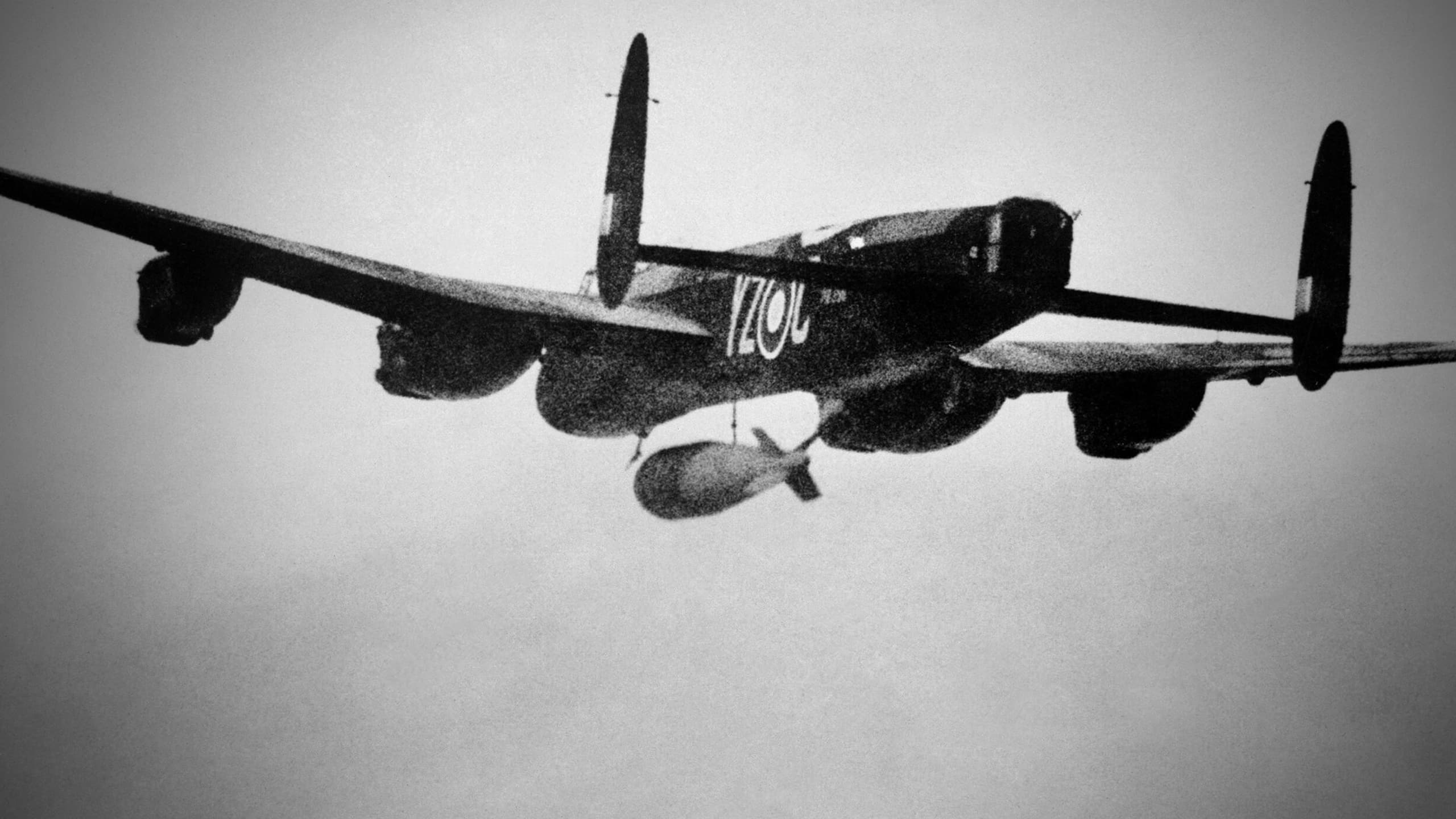
By 1940, both England and Germany realized that the Kriegsmarine’s U-Boats were the key to the Battle of the Atlantic. Eliminating the German submarine threat was Britain’s top priority. Expanding the U-Boat fleet was Germany’s greatest hope to bring the British to their knees. In those dark days, the British Isles were surrounded, and the issue was greatly in doubt.
Even though the Royal Navy was developing a convoy system to defend the precious merchant fleet supplying England, U-Boats at sea proved quite difficult to locate and destroy. In May 1940, the RAF went on the offensive, and the German shipyards and naval bases at Hamburg, Emden, and Kiel were targeted. However, the raids were generally ineffective. Even so, the chance to destroy U-Boats while they were in port, or still under construction, was an opportunity that Bomber Command simply couldn’t pass up. And the Germans knew it.
U-Boats Under Cover
As the Kriegsmarine inherited a wide range of new bases in the North Sea along the Channel Coast and in the Mediterranean, the Germans moved to create specialized defensive structures to protect the U-Boats in port.

By late 1940, the engineering, labor, and administrative needs for the project were far beyond the abilities of the German Navy. Consequently, the construction of massive concrete bunkers (often called U-Boat pens) became the responsibility of “Organization Todt”.
Bunker-building began in Germany, France, Holland and Norway. Labor was easily recruited in Germany and France, as well the construction equipment and raw materials. In occupied Norway and Holland, labor was an issue and forced laborers were drawn from various prison camps and the ranks of Russian POW’s. The RAF did their best to interdict and delay the bunker construction with frequent night raids.

There were four primary types of U-Boat bunkers:
- Covered lock: A bunker over an existing lock, protecting the U-Boat while the lock filled or emptied.
- Construction bunker: A protected site for building new U-Boats.
- Fitting-out bunker: Covered the subs after their initial launch, while they received final modifications before commissioning.
- Operational bunker: The most common type, on land or over the water berth. Created for refit, repair, and resupply between missions.Used for building new boats.
The primary U-Boat bunker locations were:
- Germany: Bremen, Helgoland, Kiel, Hamburg
- France: Bordeaux, Brest, La Rochelle, La Pallice, Lorient, and St. Nazaire.
- Norway: Bergen and Trondheim
- Holland: IJmuiden and Poortershaven
Creating an Airborne Earthquake
Some aviation designers dream of flying higher, farther or faster. Others imagine different things, like devastating their enemies with some of the largest bombs ever created. Such a man was British aviation engineer Barnes Wallis (eventually Sir Barnes Neville Wallis).

Wallis theorized that a massive bomb, the likes of which had never been used, exploded deep in the earth near a critical target, would create a devastating earthquake effect. He initially presented his concept to create a 10-ton bomb in 1941, but there was no Allied bomber capable of carrying such a weapon at that time. This led Wallis to conceive of a massive six-engine “Victory Bomber”, featuring a bomb bay large enough to carry a 22,000-pound bomb.
The RAF chose to focus on a pair of four-engine bomber designs for their strategic bombing campaign against the Reich: the Avro Lancaster and the Handley-Page Halifax. Wallis Barnes continued thinking about new bomb designs — yielding the bouncing and back-spinning 9,250-pound Vickers Type 464, the “bouncing bomb”.

Live The Armory Life. The latest content straight to your inbox plus an automatic entry to each of our monthly gun giveaways!
On May 17, 1943, the RAF attacked several dams in the Ruhr Valley with bouncing bombs, breaching two and causing considerable flooding of nearby German industry. The “Dambusters” raid went famously, encouraging Barnes to continue working on his original earthquake bomb design.
Wallis’ first earthquake bomb was the “Tallboy”, or the “Bomb, Medium Capacity, 12,000 lb.” Ready by 1944, the RAF also had an aircraft capable of carrying the payload — the Avro Lancaster.
The tremendous weight of the Tallboy, as well as the bomb’s extended length (21 feet), meant that the Lancaster “B.I Special’s” bomb-bay and doors were modified to accommodate it. Other modifications included the deletion of the dorsal turret, the removal of some defensive guns and some of the armor plate to save weight. Upgraded Rolls-Royce Merlin Mk 24 engines were added for more power on take-off and to reach the required altitude.

Tallboy bombs were labor-intensive and expensive to make, with skilled technicians required at each stage of production. The Tallboy casing was particularly strong and cast in high-tensile steel to keep the bomb intact through deep penetration of soil or reinforced concrete. A hardened steel nose cap was hand-fitted to each bomb.
The optimal altitude for a Tallboy release was 18,000 feet, and when Tallboy hit its terminal velocity, it was travelling at close to the speed of sound. To prevent tumbling, the bomb’s tail fins were crafted with a twist that created a spinning, gyroscopic effect that increased accuracy. After impact, a typical Tallboy crater was about 80 feet deep and nearly 100 feet across.
The Earthquake Effect
The Tallboy could penetrate very deep into the earth, and even well-protected bunkers were not safe as the bomb could penetrate 16 feet of reinforced concrete. Consequently, the Tallboy quickly transitioned from simply a massive bomb to an important strategic weapon.

However, while a direct hit may have been visually satisfying with a clean hole through a target-bunker’s roof, it was the earthquake effect on the foundation that was normally the most destructive. Detonating deep underground, the bomb’s tremendous energy was transferred into the target’s structure — often causing damage that would render the building unusable and too difficult to repair.
The Tallboys’ first use came during the night of June 8-9, 1944, as the RAF targeted the Saumur railroad tunnel, a critical juncture for German armored units moving from eastern France to combat the Allied landings in Normandy.
One direct hit was observed on the tunnel, and several other Tallboys impacted close by. The direct hit passed through 60 feet of earth plus the tunnel roof and exploded within, causing the tunnel to collapse. The hits nearby created an earthquake that brought down much of the mountainside to cover the tracks below. A bridge near the northwest tunnel entrance was also destroyed. Consequently, the rail line at Saumur was not ready for use until four years after the war.

Acting on intelligence reports, the RAF sent Lancaster bombers with Tallboys to attack a suspected V-2 assembly bunker at La Coupole dome (located in the Pas de Calais near Saint Omer) on June 24, 1944. The bunker complex was huge, with two underground V-2 launching pads protected by bomb-proof doors overhead.
The Germans were preparing to launch V-2’s at a steady rate every day, specifically targeting London that was less than 120 miles away. The Germans presumed this assembly and launch site to be invulnerable, and construction was given top priority. Barnes Wallis, the RAF and their earthquake bomb thought otherwise.
While conventional raids had achieved just one hit on the dome, little damage was done. Beginning on June 24th, the Tallboy bombs completely turned things around. All the exterior construction works were wrecked. One Tallboy landed directly alongside the dome, which blew out the entire cliff face of the stone quarry, and buried three of the four entrances to the site. The buttresses that supported the massive, armored plates for the dome were knocked loose and fell partway into the quarry. The tunnels beneath the dome were badly damaged and were unsafe to work in.

By July 3, 1944, construction was stopped at La Coupole, and on July 18, Hitler gave up on the concept of launching V-2 ballistic missiles from bunkers. A German report from late July concluded that “the bunker is jeopardized from underneath”. The Tallboys had moved heaven and earth to protect London.
Tallboys were also used against the German battleship Tirpitz, hiding in Norwegian fjords, during September and October 1944. Hits were achieved on both occasions, but while damaged, the giant ship remained afloat. On November 12, 1944, during Operation Catechism, 32 Lancaster bombers dropped 29 Tallboys on Tirpitz in her anchorage near Tromso, Norway. At least two of the bombs hit the target, and several near misses were also observed. Shortly after, Tirpitz capsized, with nearly 1,200 members of her crew killed.
Targeting the U-Boat and E-Boat Pens
With the Allied invasion of Normandy, there would be a huge amount of shipping in the English Channel. The Royal Navy was committed to keeping the sea lanes clear and safe from attacks by German subs and their highly effective torpedo boats (German designation: S-Boat, Allied designation: E-Boat).

Allied Naval Forces commander in chief Admiral Ramsey decided it was time to hit the enemy where they felt the safest — in their home ports, beneath the thick concrete roofs of their protective bunkers. The RAF delivered a massive attack on the E-Boat pens at Le Havre on June 14, 1944. Many E-boats were sunk or damaged, and casualties among the crews were high.
On June 15th, the RAF struck Boulogne harbor, dropping 22 Tallboys on the E-Boat pens there. Despite the difficulties with cloud cover over the target, the damage was severe and a powerful message sent. As a result, the Germans moved their E-Boat flotillas to Ijmuiden on the Dutch coast. The E-Boats would not interfere in the sea battle of Normandy.

On August 5th, the RAF scored six direct hits (out of 15 Tallboys dropped) on the sub pens at Brest, France. This all but eliminated Brest as a viable U-Boat base, and the Kriegsmarine began scrambling to add even greater protection to their remaining bunkers. In December 1944, and then again in February 1945, the RAF turned their attention to the U-Boat and E-Boat pens at Ijmuiden and Poortershaven in Holland — direct hits penetrated the roofs, and near-misses damaged the bunker foundations in both locations.
On to the Grand Slam
As if the 12,000-pound Tallboy wasn’t destructive enough, Barnes Wallis went on to create the 22,000-pound “Grand Slam”. Work on Tallboy’s big brother began in late 1943, when the Lancaster bomber proved capable of carrying an even larger bomb.

Grand Slam pushed the Lancaster to its load-carrying limits and, even after further modifications, a Lancaster carrying a Grand Slam had a noticeable bend to its wings before the huge payload was released. Upon release, Lancaster pilots reported that their aircraft immediately “jumped” 300-feet higher.
Filled with more than five tons of “Torpex” by hand, the giant center of explosive filling was topped with one inch of pure TNT, and provided with three chemical time-fuses to ensure detonation. A Grand Slam whistled earthward in its chrome casing at nearly the speed of sound, prepared for even greater concrete penetration than the Tallboy.

Grand Slam attacks did not begin until March 1945, and the biggest of all WWII bombs was only used 41 times. Often used in conjunction with Tallboys, the pair teamed up for attacks on U-Boat pens at Farge on March 27, 1945, and at Hamburg on April 9th. Two Grand Slam hits were achieved at Farge, causing considerable damage — particularly to German morale. The end of the war couldn’t come soon enough.
In American Service
The Tallboy was built and used by the U.S.A.A.F. as the” T-10” (later renamed the M-121). Originally intended to be used against Japan’s hardened defenses, the atomic bomb raids interrupted their use.

Tallboys were used in the Korean War against North Korean road and railway bridges. Carried by B-29 bombers, the American version remained in production until 1955. The last use of the Tallboy was to clear large areas of the Vietnam jungle to create a helicopter landing zone. The last one was dropped, sans tail, by a C-130 during Operation Commando Vault in March 1969.
Editor’s Note: Please be sure to check out The Armory Life Forum, where you can comment about our daily articles, as well as just talk guns and gear. Click the “Go To Forum Thread” link below to jump in!
Join the Discussion
Read the full article here