
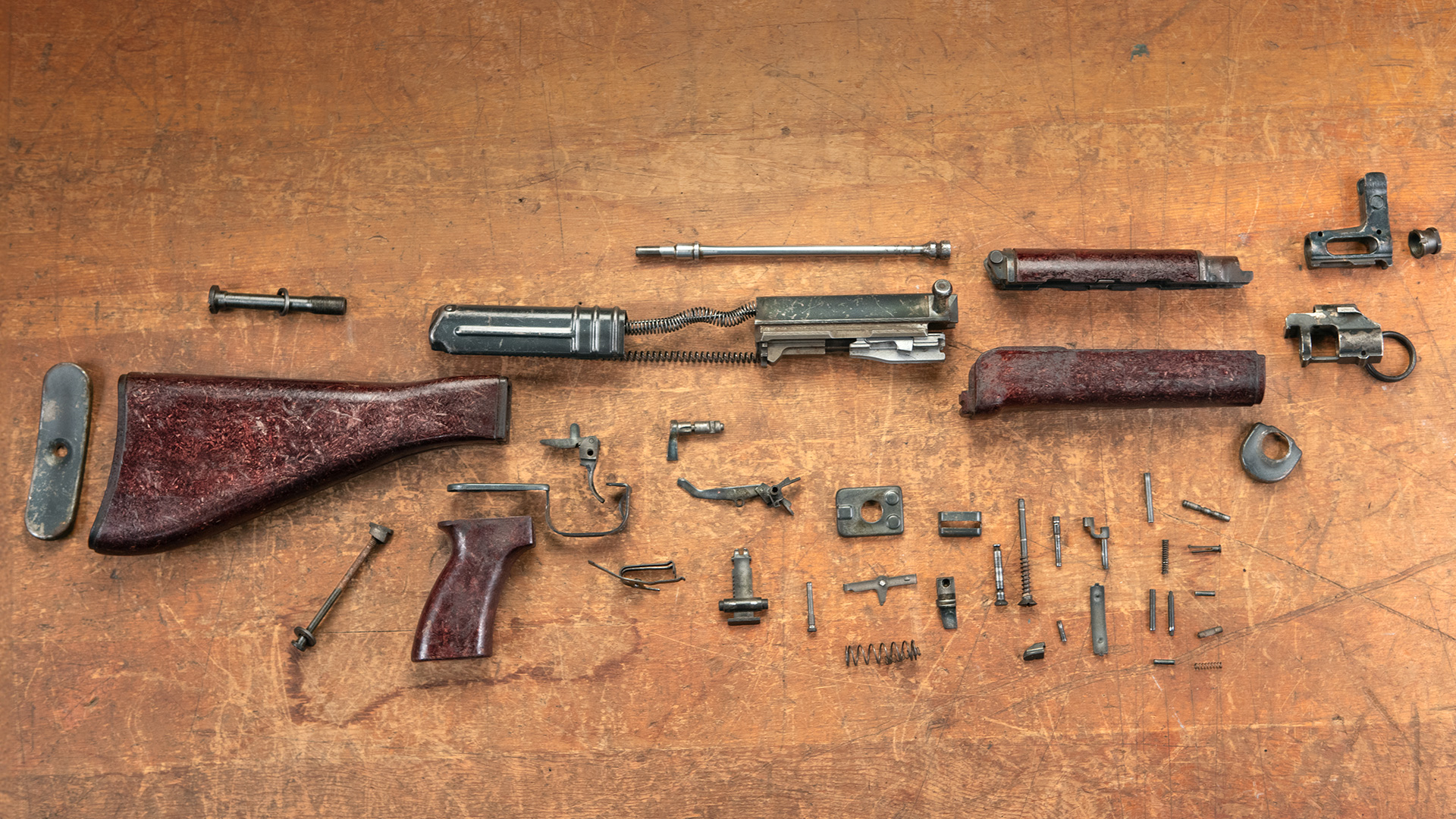
Surplus kits, like this vz. 58 kit from Century Arms, are a DIY way to get hard-to-find models while learning about how these firearms operate.
The components that make up a “rifle kit” have evolved over time. For several decades, the term chiefly referred to a complete set of parts for a traditionally styled, blackpowder rifle that needed minor fitting, surface finishing and assembly. The rifle kits of recent years, whether comprised of surplus parts or all-new components, are far different animals. Popular modern sporting rifle platforms and legal-to-own versions of legacy battle rifles figure heavily into the kit world today.
When comprised of used components taken from demilitarized (or “demilled”) service arms, parts kits typically require replacement of several components. The unusable parts, such as cut-up receivers and (sometimes) barrels, may have been intentionally destroyed to bring the kit into compliance with current U.S. laws, or they may simply be missing. Legal replacements may be provided by the supplier or required to be furnished by the buyer/builder.
Other kits contain completely new parts, either as stripped components or partially built rifles, with some assembly still required. Most AR- and many AK-pattern rifle kits fall into the new-parts category. Regardless of kit type, each of the modern DIY-rifle styles fits a wide range of needs, including home defense, hunting and tactical training.
A quick search for “demilled rifle parts kits” will yield a large number of mid- and late-20th-century battle-rifle options. Many surplus kits require gunsmithing skills and, due to specific parts which may be included, necessitate familiarity with federal and state laws. For example, several battle-rifle parts kits include original, full-automatic trigger groups. While semi-automatic receivers are designed to prevent installation and use of these triggers, modifying either component to work together violates the National Firearms Act, which carries hefty legal consequences.
You’ll also find kits with short barrels permanently pinned and welded to be at least 16 inches long or used for large-format-pistol or registered short-barrel-rifle builds. The current (2009) edition of Publication 5320.8, the “National Firearms Act Handbook,” is available for download from the ATF’s website (atf.gov) and can be a useful resource. While not fully inclusive, this publication shines a fair amount of light on many of the common prohibited components and configurations. When in doubt, contact the ATF’s NFA Branch for clarification or a Class II SOT (manufacturer of NFA firearms) for hands-on help.
When a receiver is required to complete a build kit, the simplest option is to purchase it from an FFL—complete with all appropriate background checks and an ATF Form 4473. However, current federal laws do not prevent an individual from manufacturing a receiver for personal use, should they have that ability. Nonetheless, the rules vary from state to state, so it’s important to understand your local laws as well.
This is especially important in light of the Department of Justice’s (DOJ’s) April, 2022, regulation updates to the definitions of and marking requirements for firearm frames and receivers. Despite lower court rulings that prevented enforcement of this reclassification effort, SCOTUS upheld DOJ’s position in 2025, leaving in place a confusing and convoluted web of rules that risks tripping up unwary and otherwise innocent gun owners and FFLs.
As a licensed manufacturer of both NFA and regular firearms, I have to stay abreast of and fully familiar with all relevant regulations. Still, the so-called “Frame or Receiver Rule” is packed with so much ambiguity that I’m forced to turn away certain types of work just to be on the safe side. That costs me potential customers, but dancing around gray areas is unwise in this industry. My advice to anyone considering a receiver-less rifle kit is to purchase an already-serialized and marked receiver from a licensed dealer.
Finding a rifle parts kit that costs less than a bottom-tier rifle of the same model isn’t too challenging. Thus, a careful shopper with the tools and ability to correctly assemble parts can land a bargain. The builder also gets the satisfaction of helping to create (or recreate) a functional tool. The nostalgia factor for out-of-production or otherwise non-importable firearms is another positive.
I’ve had the opportunity to service and test a fair number of rifles built from parts kits in recent years. In some cases, the builder simply wanted a second set of eyes and proper tooling (if needed) to remedy anything that may have been out of whack. Other customers had concerns about parts’ conditions or quality. On the AR side of the house, parts kits have been good enough to allow for functional rifles that were well-suited to general-purpose use. Where new components had to be replaced or modified, they were limited to small parts with fit or finish problems. The major components did what they were supposed to do, even if they weren’t top-tier.
Rifles built from demilled surplus parts kits have needed more attention. In some cases, major component replacements were required. With the parent rifles having endured all the rigors of military service, heavily worn finishes or corroded parts aren’t uncommon. Moderate-to-significant wear of the chamber, bore and moving parts may also be encountered. Pay close attention to pictures, descriptions and return policies before ordering. Since headspace and other critical dimensions and components should be checked prior to use, it’s worth letting a gunsmith check your finished masterpiece to ensure it’s safe.
As plentiful as they may seem now, surplus military-rifle-parts kits will not last forever. I grew up in the era when semi-auto versions of just about every mid-20th-century fighting rifle could be had at fractions of today’s prices. My shooting buddies and I wagered that they’d still be around when we finally saved enough money to buy our favorites, but politics and the laws of supply and demand had something to say about that.
If we were to go strictly by the number of options on the market, we could conclude that the age of the kit rifle is at hand. Considering that December is when most of us gather with family and friends to count blessings and exchange gifts, it’s worth considering the multitude of affordable rifle kits that are waiting to be born or simply remade into new images of their old selves. Just sayin’.
Read the full article here