
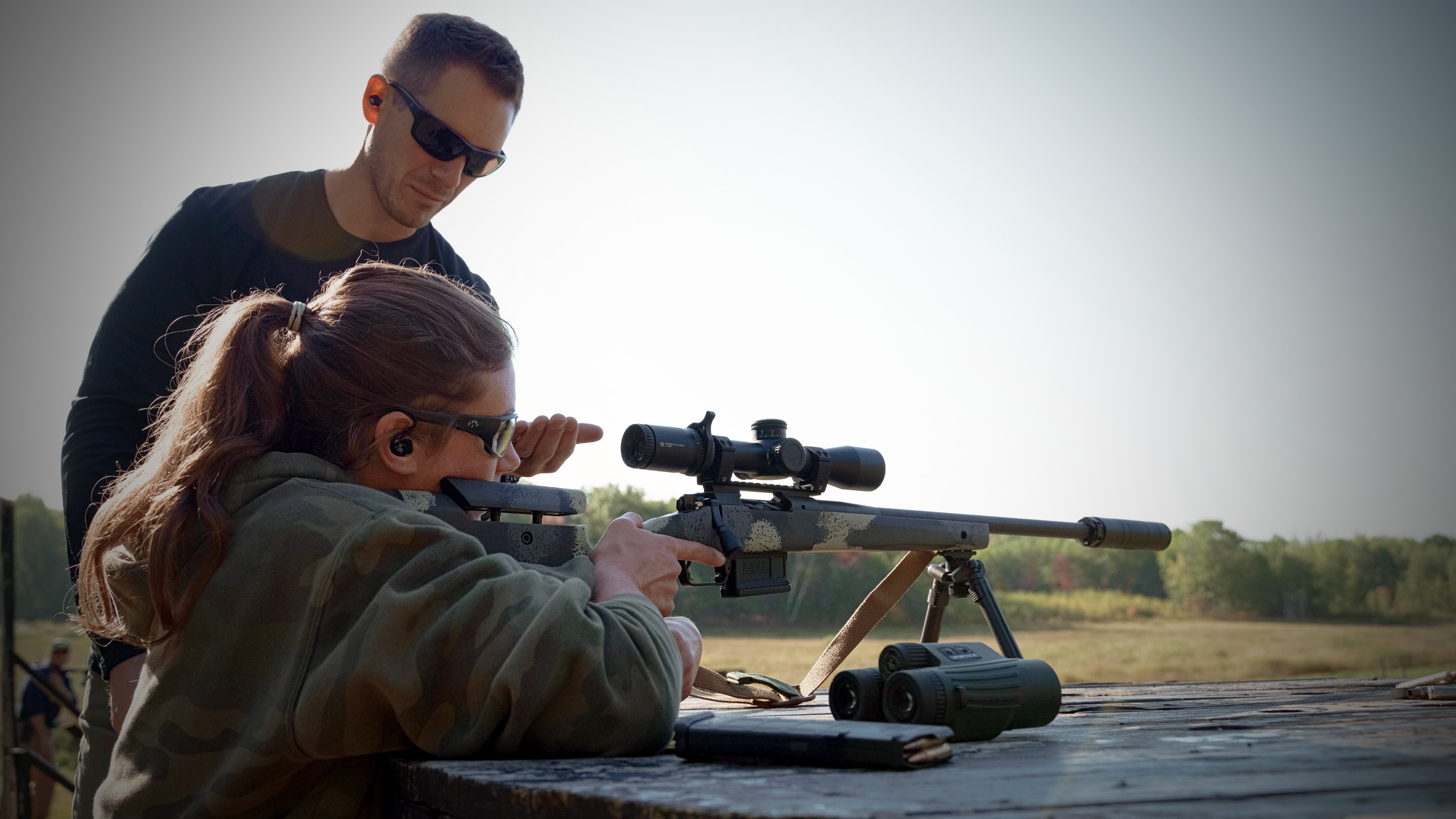
Fall is the time of year when many firearm owners will head out into fields and forests to fill their freezers with harvested game. This includes everything from small game such as rabbits and squirrels to much larger animals such as whitetail deer and elk.
Whether it is for the sport, sustenance, or camaraderie amongst family and friends, you need to remain safe while hunting. So, we are not only going to discuss the four golden rules of firearm safety, but also more specific rules geared towards hunting.
The Four Cardinal Rules of Gun Safety
If you have spent any amount of time around firearms or been through a youth firearm safety course, these four cardinal rules of firearm safety should be very familiar to you:
- Treat EVERY firearm as if it’s loaded
- Never let your muzzle cover anything you are not willing to destroy
- Keep your finger OFF the trigger until your sights are on target and you have made the conscious decision to shoot
- Be sure of your target — AND what’s in front of it, behind it, and beyond it
These four rules are universal. Non-negotiable. Every time you handle a firearm. Everything else in hunting safety is an extension of these, which we will discuss next.

Rules to Hunting Safely
The four cardinal rules of gun safety are universal for a reason. Whether you are handling a gun in your home beside a safe, at a firing line at a gun range, or sitting in a treestand, the rules of safety apply no matter where you are. Additionally, when we are hunting, we need to consider even more factors because we are in a fluid, ever-changing environment in the outdoors while also pursuing unpredictable game. Safety is paramount. So, consider all of these practices as well when it comes to hunting.
Positively ID your Game Animal
We sometimes hear of someone shooting a cow on a deer opener, and what that describes is horrible gun safety. You should never fire a gun at movement, color, noise, or something that you thought was an animal. Make zero assumptions. Only engage what you positively identify.
Maintain Muzzle Discipline while Traveling
This applies to traveling in a truck, ATV, UTV, walking, traversing a fence, crossing a stream, or climbing into a stand. When you are on the move you might be more likely to be complacent about muzzle discipline. That’s why it bears reminding to never forget about this. This is non-negotiable.

Remain Unloaded until You’re Actively Hunting
It’s simple. If you’re crossing a barbed wire fence or climbing a ladder into a treestand, unload your firearm. Even if you see a trophy animal in those precarious positions, you aren’t going to attempt a shot in the moment. To say it’d be wildly unsafe to shoot a rifle hanging off of a ladder is an understatement. Finish climbing, or finishing clearing that barbed wire fence, reload and safely engage the game animal afterwards.
If you dislike the thought of having your gun empty out in the field because you believe you are going to miss a precious opportunity, then we’d suggest having an empty chamber with a full magazine. Then, your firearm is in a safe condition to be moving, yet with a purposeful cycling of the action you can be loaded in a fraction of a second.
Check out Are Boat Tail Hollow Points Good for Hunting?
Know your Backstops
Most people do pretty well in this area, if a backstop is present. It’s when none exists that people can get in trouble. A good example of a backstop is the forest floor if you’re shooting down from an elevated position. A bad instance is when someone wants to shoot at an animal that is “skylined” — or merely a silhouette against the sky. Whether you hit or miss your target, you have no idea what’s beyond that skylined animal. That’s extremely risky and a shot you should not take.

Live The Armory Life. The latest content straight to your inbox plus an automatic entry to each of our monthly gun giveaways!
Wear Blaze Orange or Blaze Pink
When you are visible to other surrounding hunters, you ensure your own safety as well as theirs. So, wear blaze orange — or blaze pink, when applicable, if you prefer — to stay seen and safe afield. And for those who are concerned that blaze patterns will give away your position to animals, simply remember that our parents and grandparents harvested more animals in blue jeans and red flannel than we can count. You digging through your hunting pack for a third Snickers candy bar is giving away your position, not the silent blaze orange camo hat on your head.
Know your Zones of Fire

This is something that bird hunters are more familiar with, but it is applicable to all kinds of hunting. If you are hunting with others, or in the same vicinity as others, you need to know your “zone of fire” — or, safe area to fire in. If you’re sitting in a ground blind with someone else, it might only be a 30-degree field of fire in front of you. Every scenario is different and you need to acknowledge your safe and unsafe firing areas before a trigger pull is even considered.
Don’t Hunt Impaired
You should never hunt impaired no matter how you define the word impaired. If you’re sleep-deprived, you need to catch up on your rest so that you don’t fall out of a treestand. If you’re inebriated, you will not be able to make appropriate judgment calls or have the same motor skills to execute an ethical, humane shot on game. While every successful hunt deserves celebrating, make sure to save the celebratory activities for after the hunt. Not during or before.
Don’t miss our article: What Is Still Hunting?
The Golden Rules of Rifle Safety
Every rule that we mentioned, from the four cardinal rules of firearm safety to those more specific to hunting, are all things we should be able to intuit or simply know from past experiences and the responsibilities of gun ownership. Yet, in the heat of the moment while hunting, we can sometimes forget (but shouldn’t).

So, it’s always worth reviewing them so we can continue to enjoy our pastime of hunting and the use of our tools that are firearms. And remember, these rules are non-negotiable in the field. Stay safe out there.
Editor’s Note: Please be sure to check out The Armory Life Forum, where you can comment about our daily articles, as well as just talk guns and gear. Click the “Go To Forum Thread” link below to jump in!
Join the Discussion
Featured in this article
Read the full article here