
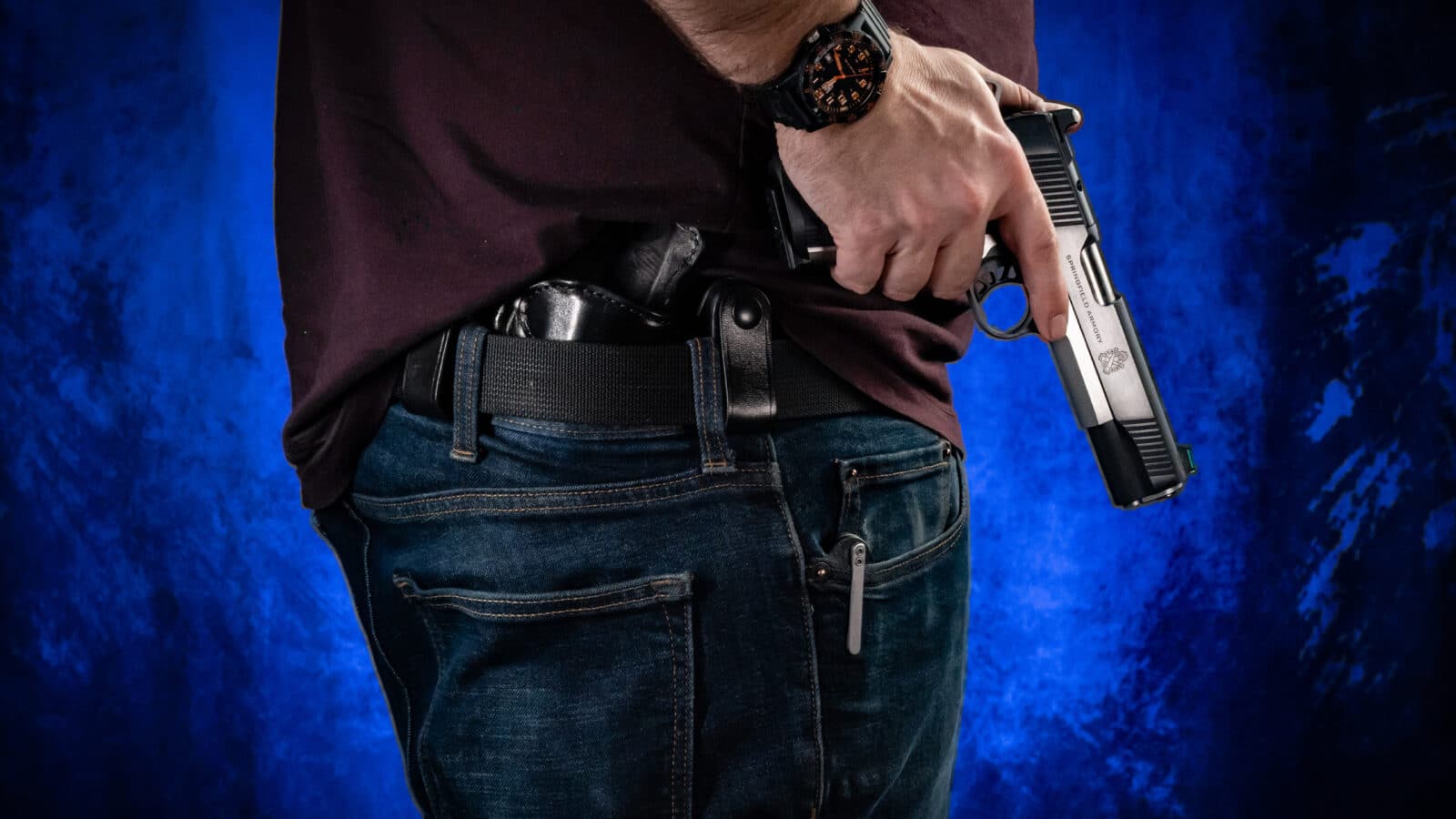
The 1911 occupies a curious position in the modern concealed carry landscape. It is widely respected and often admired, yet only sometimes considered a practical choice for everyday carry. Many people speak of it the way they speak of a classic automobile: beautiful, capable, historically significant, but somehow disconnected from the realities of daily use. That perception tends to change, however, when one actually commits to carrying a 1911 on a regular basis.
Much of what people believe about the platform is shaped less by firsthand experience than by repetition. The 1911 is commonly described as heavy, low in capacity, old-fashioned or overly complicated. These characterizations are repeated often enough that they begin to feel like established facts, even among shooters who have never spent meaningful time with one on their belt. Rather than debating those assumptions, I chose to test them.
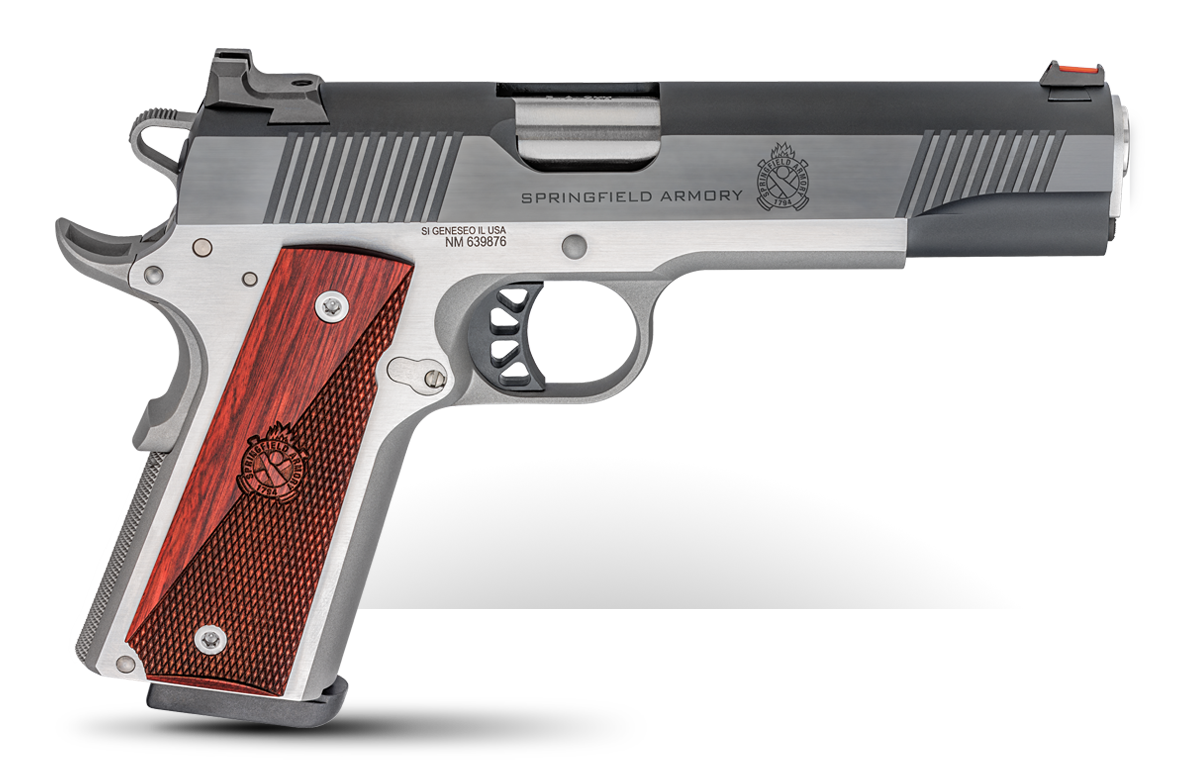
For an extended period, my daily carry gun was a full-size, 5” customized Springfield Armory 1911 Ronin. I carried it not out of nostalgia or to make a statement, but to understand what the platform truly demands of its user and what it offers in return.

What I found is that the 1911 is not outdated. It is demanding. In a culture that increasingly prioritizes convenience and automation, that demand is precisely what makes the platform compelling.
Rowing Your Own
I often describe the 1911 as the stick shift of the handgun world. Not because it is slow or antiquated, but because it requires active participation. Modern striker-fired pistols are designed to reduce friction for the user. They minimize controls, simplify operation, and reduce the number of decisions a shooter must make under stress. That’s not a flaw. It’s thoughtful engineering, and for many people it is the correct solution.
Because it’s the grandfather of autoloading handguns, the 1911 exists on the opposite end of that spectrum. It introduces additional responsibilities: a manual safety, a grip safety, a single-action trigger and a greater dependence on proper maintenance. This doesn’t make it inherently better or worse, but it does make it a different kind of relationship with the firearm you choose to carry.

The 1911 does not simply tolerate the user. It expects engagement. When that engagement is present, the platform rewards the shooter with a level of precision, consistency, and mechanical feedback that is extremely appealing.
[Read Scott Wagner’s article discussing thumb safety vs. no thumb safety for additional context.]
Switching Is Not Automatic
One of the most common errors shooters make when changing carry platforms is assuming that competence transfers seamlessly. In practice, it does not. Drawing a striker-fired pistol and drawing a 1911 may look similar from the outside, but internally they are distinct sequences. The order of operations changes, the grip becomes more critical, the thumb must perform a specific task, and the overall timing shifts.

When I transitioned to carrying the Ronin full time, I approached it deliberately. I spent considerable time in dry practice rebuilding my draw so that disengaging the safety occurred naturally as part of the presentation. I ensured that my grip consistently depressed the memory pad on the grip safety without conscious effort. The 1911 is uncompromising in this regard. If the grip is flawed, the gun will not fire. If the thumb placement is careless, the safety will remain engaged. This is not the pistol being unforgiving; it is the pistol providing immediate and honest feedback. That feedback is what enables refinement in training.
[Don’t miss Massad Ayoob discussing 1911 pros and cons.]
About the Weight
A full-size steel 1911 is undeniably heavy. That reality, however, is only problematic when it is poorly managed. With a proper EDC gun belt (Blue Alpha EDC Hybrid in my case) and a well-designed inside-the-waistband holster, the Ronin carried far more comfortably than I initially expected. Its length helps distribute weight and anchor the pistol against the body, preventing it from shifting or tipping during movement.

Live The Armory Life. The latest content straight to your inbox plus an automatic entry to each of our monthly gun giveaways!
Comfort in concealed carry is not primarily about making the firearm smaller. It’s about ensuring that the entire system — gun, holster, belt, and placement — functions cohesively. Most complaints about discomfort stem from mismatched or inadequate supporting gear rather than from the firearm itself. When those elements are properly aligned the 1911 becomes stable, predictable and consistently accessible, which in turn builds confidence.
[Read Massad Ayoob’s thoughts on full size 1911 concealed carry for an additional viewpoint.]
Capacity and Context
Capacity is an unavoidable part of the traditional 1911 discussion, and rightly so. A single-stack magazine holds fewer rounds than most modern designs. That observation is accurate, but incomplete. Every carry decision is a series of tradeoffs. It involves balancing comfort, concealability, shootability and personal competence rather than preparing for abstract worst-case scenarios.

The 1911 sacrifices some capacity in exchange for a trigger that facilitates precision, a grip angle that prioritizes natural pointability, and a recoil impulse that many shooters find easier to manage than lightweight polymer pistols. While these traits do not replace the need for awareness or sound judgment, they do enhance the shooter’s ability to place accurate rounds under pressure.
What It Changed for Me
Living with the Ronin altered how I think about discipline. The 1911 encourages consistency. It demands attention to the draw, the grip, maintenance, magazines and ammunition. Not through coercion, but through response. When those elements are respected and trained with, the platform performs with an absolutely remarkable predictability.

In return, the Ronin offered a pistol that shot flat, tracked cleanly, and behaved consistently from shot to shot. It did not obscure its expectations, its behavior, or its limitations. That transparency is what builds trust and consistency between shooter and machine.
[If you are new to the platform, check out Dan Abraham’s article How to Shoot a 1911.]
Low Sung Appeal
The 1911 does not require defense. It has endured for more than a century because it works. What it does require is to be understood on its own terms rather than judged against platforms designed for fundamentally different priorities. It is not intended to be the lightest, the simplest or the most forgiving option available. It is intended to be deliberate.

For some shooters, that precision is a burden. For others, it is the appeal. After living with the platform, I do not see the 1911 as a relic of the past. I see it as a tool for those who value engagement over automation, intention over convenience, and craftsmanship over abstraction.
It remains a stick shift in an automatic world. For those willing to learn its timing, respect its mechanics and learn the skills it demands, the 1911 continues to be one of the most rewarding pistols a person can choose to carry.
Shoot safe.
Please be sure to check out The Armory Life Forum, where you can comment about our daily articles, as well as just talk guns and gear. Click the “Go To Forum Thread” link below to jump in and discuss this article and much more!
Join the Discussion
Featured in this video
Read the full article here